Overview
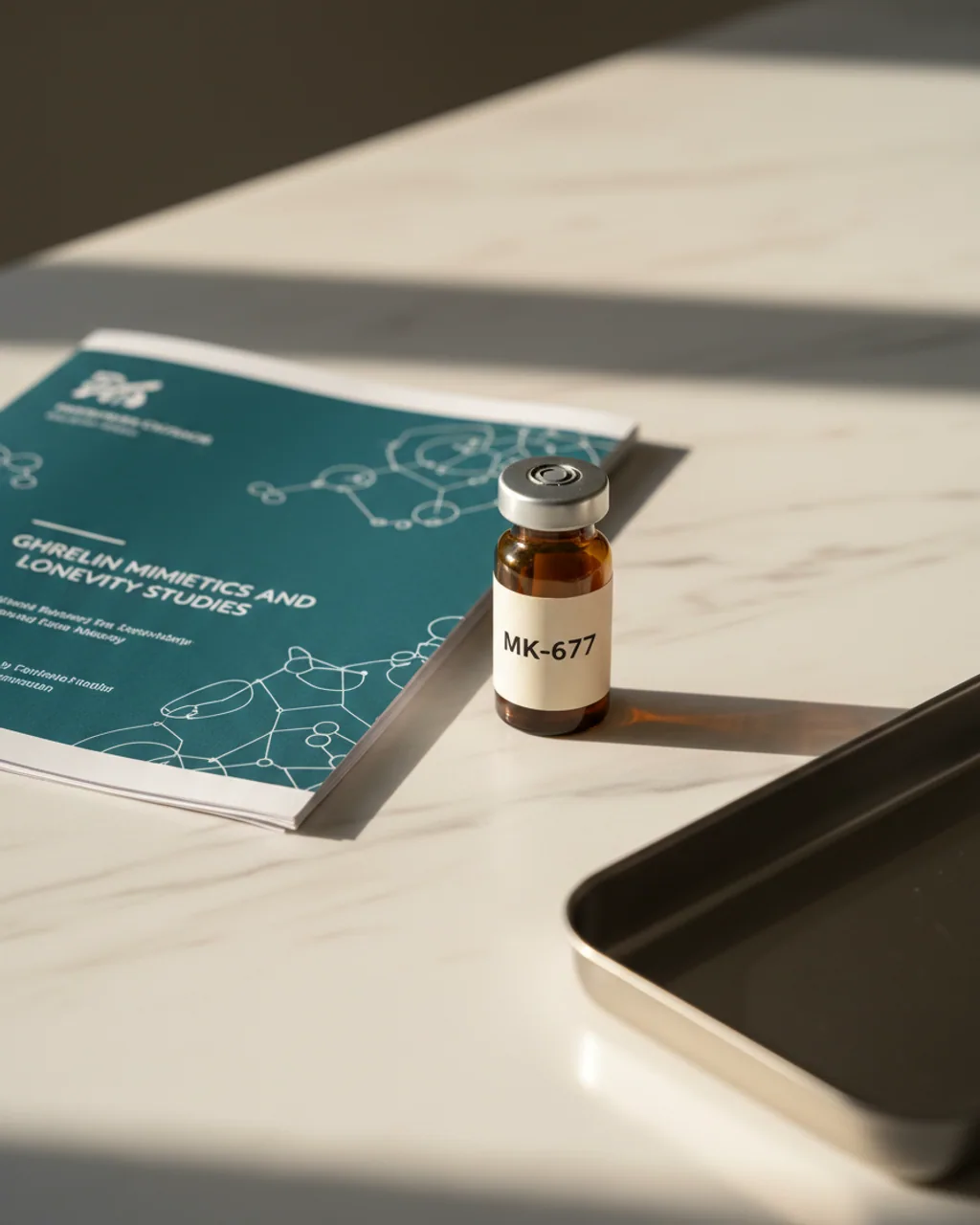
MK-677 (Ibutamoren) is technically not a peptide — it is a non-peptide small molecule that mimics the action of ghrelin at the GHSR-1a receptor. However, it is categorized alongside peptide GH secretagogues due to its identical mechanism of action and its frequent co-use with GHRH peptides in research protocols. It is included on Peptidely for completeness and because practitioners and researchers often consider it alongside peptide options.
MK-677’s most distinguishing feature is its oral bioavailability — making it the only practical non-injectable option for sustained GH and IGF-1 elevation. With a half-life of approximately 24 hours, once-daily oral dosing produces consistent, sustained elevation of GH (through amplified pulsatile release) and downstream IGF-1.
MK-677 was originally developed by Merck as part of the MK-series (hence the name) and has been studied in Phase II trials for indications including GH deficiency, hip fractures in elderly patients, and muscle wasting in cancer cachexia.
Mechanism of Action
Oral GHSR-1a Agonism: Like GHRP-2 and Ipamorelin, MK-677 activates the ghrelin receptor — but as a non-peptide molecule, it resists proteolytic degradation and achieves substantial oral bioavailability (~60–70%). This is the pharmacological property that distinguishes it from peptide GHRPs that must be injected.
Sustained GH Pulsatility: Unlike exogenous GH (which suppresses endogenous pulsatility), MK-677 amplifies and sustains the frequency and amplitude of endogenous GH pulses from the pituitary — a more physiological approach to GH elevation.
IGF-1 Elevation: GH released in response to MK-677 drives hepatic IGF-1 synthesis; sustained daily dosing produces reliable, measurable IGF-1 elevation (typically 20–60% above baseline in research).
Ghrelin-like Effects: As a ghrelin mimetic, MK-677 also increases appetite, promotes sleep quality (GH secretion is sleep-associated), and may modulate insulin sensitivity.
Clinical Research & Evidence
Evidence Level: 🟡 EL2 — Phase II human trials completed; no Phase III or FDA approval
| Trial | N | Key Finding |
|---|---|---|
| Chapman et al. 1996 | 32 elderly adults | MK-677 25 mg/day: IGF-1 increased 38–62%; GH pulsatility restored toward youthful pattern |
| Nass et al. 2008 | 65 adults with GH deficiency | Increased IGF-1, improved body composition; but increased fasting glucose |
| Adunsky et al. 2011 | 123 hip fracture patients | Improved functional outcomes vs. placebo (Phase IIb) |
| Copinschi et al. 1997 | 24 young/elderly | Improved sleep quality, particularly delta wave sleep |
Cancer cachexia (Phase II): MK-677 showed positive signals for lean mass preservation in cancer patients, though the program was discontinued before Phase III.
Research-Referenced Dosing Protocols
- 10–25 mg oral, once daily (typically before bed for sleep/GH pulse alignment)
- Long-term use (6+ months) explored in multiple trials
- 25 mg most commonly used dose in Phase II trials
Side Effects & Contraindications
Common:
- Increased appetite (ghrelin effect — can be significant)
- Water retention / peripheral edema
- Fatigue or lethargy (especially initial weeks)
- Increased fasting glucose / reduced insulin sensitivity (significant concern)
- Numbness/tingling (carpal tunnel-like)
- Increased cortisol (modest, class effect)
Serious:
- Worsening of insulin resistance / hyperglycemia — particularly relevant in pre-diabetic or diabetic individuals
- Potential for IGF-1 elevation to promote growth of pre-existing tumors
Contraindications:
- Diabetes or pre-diabetes (glucose worsening)
- Active malignancy
- Congestive heart failure (edema risk)
Legal & Regulatory Status
| Region | Status |
|---|---|
| United States | Not FDA approved; research chemical status. Not a controlled substance. |
| European Union | Not approved; research chemical |
| WADA | Prohibited (GH secretagogues) |
Note: MK-677 is widely available as a “research chemical” but has also been found mislabeled in supplement products (SARMs products). Third-party testing recommended.
Research Citations
- Chapman IM, et al. Stimulation of the GH/IGF-I axis by daily oral administration of MK-677, a growth hormone secretagogue. J Clin Endocrinol Metab. 1996.
- Nass R, et al. Effects of an oral ghrelin mimetic on body composition and clinical outcomes in healthy older adults. Ann Intern Med. 2008.
- Adunsky A, et al. MK-0677 (ibutamoren mesylate) for the treatment of patients recovering from hip fracture. Arch Gerontol Geriatr. 2011.
- Copinschi G, et al. Prolonged oral treatment with MK-677, a novel growth hormone secretagogue, improves sleep quality in man. Neuroendocrinology. 1997.