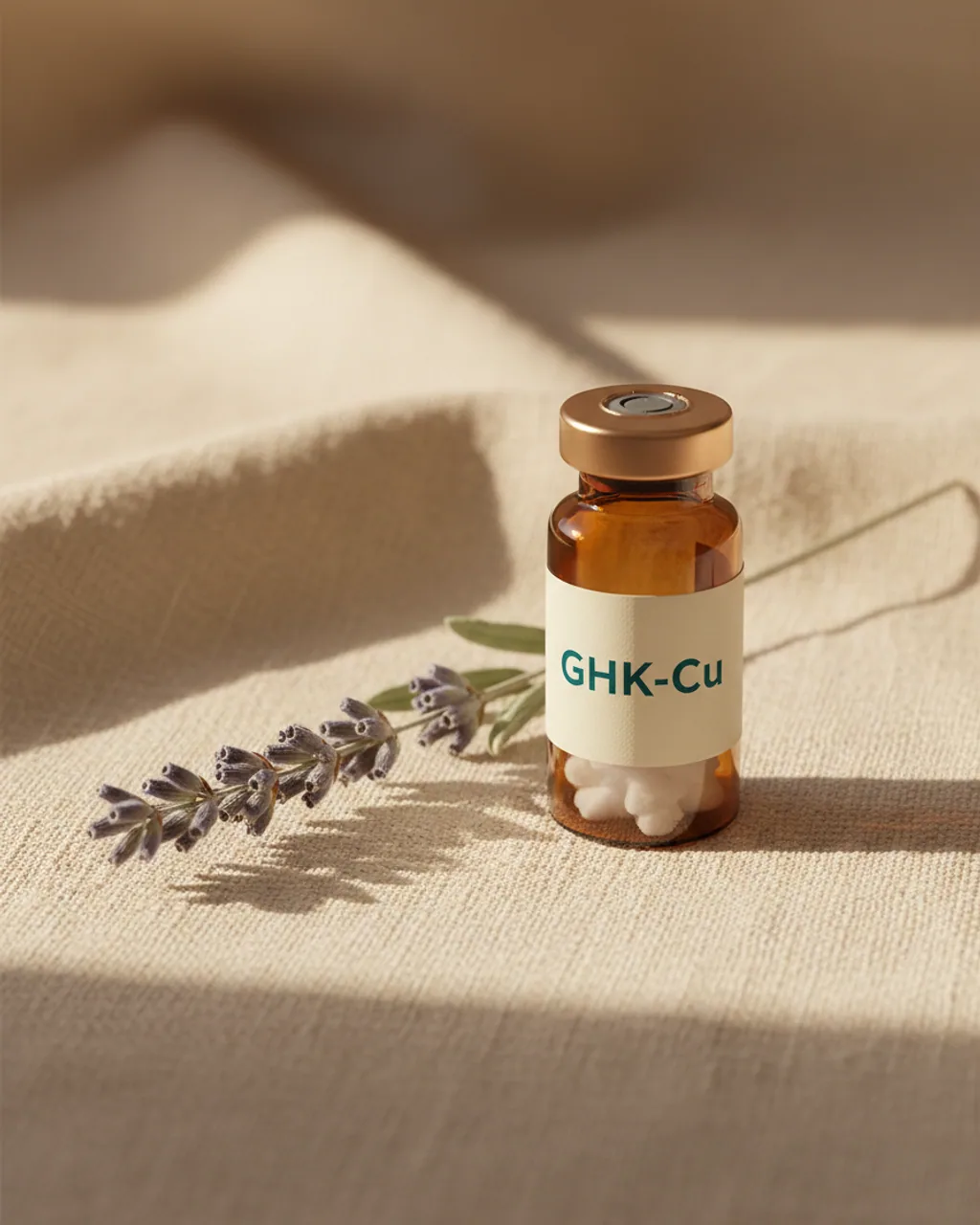
Overview
GHK-Cu is a naturally occurring copper complex of the tripeptide glycine-histidine-lysine. It was first isolated from human plasma in 1973 by Loren Pickart, who discovered that plasma from young humans restored the function of aging liver tissue — and identified GHK as the active factor responsible.
GHK-Cu is found in human plasma, saliva, and urine, and its concentration declines sharply with age: approximately 200 ng/mL in plasma at age 20, dropping to around 80 ng/mL by age 60 — a nearly 60% reduction that correlates with the known decline in skin regeneration and wound healing capacity in aging.
In the cosmetics industry, GHK-Cu is a well-established ingredient in anti-aging skincare. In the research and biohacking community, systemic administration (subcutaneous or intranasal) is explored for broader longevity and tissue repair effects.
Mechanism of Action
Wound Healing Gene Activation: GHK-Cu dramatically upregulates expression of wound healing genes including collagen I, collagen III, elastin, fibronectin, metalloproteinases (MMPs), and tissue inhibitors of metalloproteinases (TIMPs). This balanced MMP/TIMP regulation enables remodeling of aged or damaged extracellular matrix.
Antioxidant System Upregulation: Activates superoxide dismutase (SOD) and catalase — two primary cellular antioxidant enzymes — protecting against oxidative damage implicated in aging and chronic disease.
Anti-Inflammatory: Reduces TNF-α and other pro-inflammatory cytokines; promotes resolution-phase anti-inflammatory signaling.
DNA Repair: Emerging research suggests GHK-Cu enhances expression of DNA repair genes and increases ubiquitin-proteasome system activity — implications for aging and cancer biology.
Nervous System: In animal models, GHK-Cu promotes nerve outgrowth and myelination — a potential neuroprotective mechanism currently under investigation.
Clinical Research & Evidence
Evidence Level: 🟠 EL3 — Strong in vitro and animal data; limited human clinical trials
| Study | Focus | Finding |
|---|---|---|
| Pickart et al. 2015 | Genomic analysis | GHK modulates 4,000+ human genes; major roles in inflammation, collagen, DNA repair |
| Gorouhi et al. 2009 | Skin aging (topical) | Improved skin laxity, wrinkle depth vs. placebo in human cosmetic trial |
| Wegrowski et al. 1992 | Wound healing | Accelerated re-epithelialization vs. control |
| Multiple cosmetic trials | Topical application | Consistent improvement in skin thickness, elasticity, and hydration |
Genomic scope: Loren Pickart’s 2015 analysis of GHK’s effects on the human genome (using microarray data) revealed modulation of over 4,000 genes — including significant upregulation of longevity-associated pathways including FOXO transcription factor targets, proteostasis genes, and DNA repair machinery.
Dosing — Topical (Well-Established in Cosmetics)
- 2–5% concentration in topical serums/creams
- Daily application; widely marketed in premium skincare
Research-Referenced Dosing — Systemic (Research Only)
- Subcutaneous: 0.5–2 mg/day, typically cycled 3–5 days/week
- Intranasal: 100–200 mcg/dose for neurological applications (very early research)
Side Effects & Contraindications
Topical: Generally extremely well-tolerated; rare contact sensitization.
Systemic (anecdotal):
- Local injection site reactions
- Temporary skin flushing
- No significant toxicity in available animal data
Contraindications:
- Copper hypersensitivity (rare)
- Wilson’s disease (copper metabolism disorder)
- Active malignancy (pro-angiogenic and pro-growth signals theoretical concern)
Legal & Regulatory Status
| Region | Status |
|---|---|
| United States | Cosmetic ingredient — unrestricted topical use. Systemic use: research only; not FDA approved. |
| European Union | Approved cosmetic ingredient (EU Cosmetics Regulation) |
| Research use | Available from research chemical suppliers |
Research Citations
- Pickart L, et al. The human tripeptide GHK-Cu in prevention of oxidative stress and degenerative conditions of aging. Rejuvenation Res. 2015.
- Gorouhi F, et al. A randomized, double-blind trial of topical palmitoyl pentapeptide and GHK-Cu for anti-aging. Arch Dermatol Res. 2009.
- Pickart L, Margolina A. Regenerative and protective actions of the GHK-Cu peptide in the light of the new gene data. Int J Mol Sci. 2018.
- Buffoni F, et al. Glycyl-L-histidyl-L-lysine and skin wound healing. Arch Int Pharmacodyn Ther. 1995.